

Table of Contents
Why Corfu's Easter Is Different
While all of Greece celebrates Easter with profound religious devotion, Corfu’s customs reflect centuries of Venetian cultural influence blended with Orthodox spirituality. The island maintains four philharmonic bands (unique in Greece), performs Italian-influenced liturgical music, and follows ceremonial protocols established during Venetian rule.
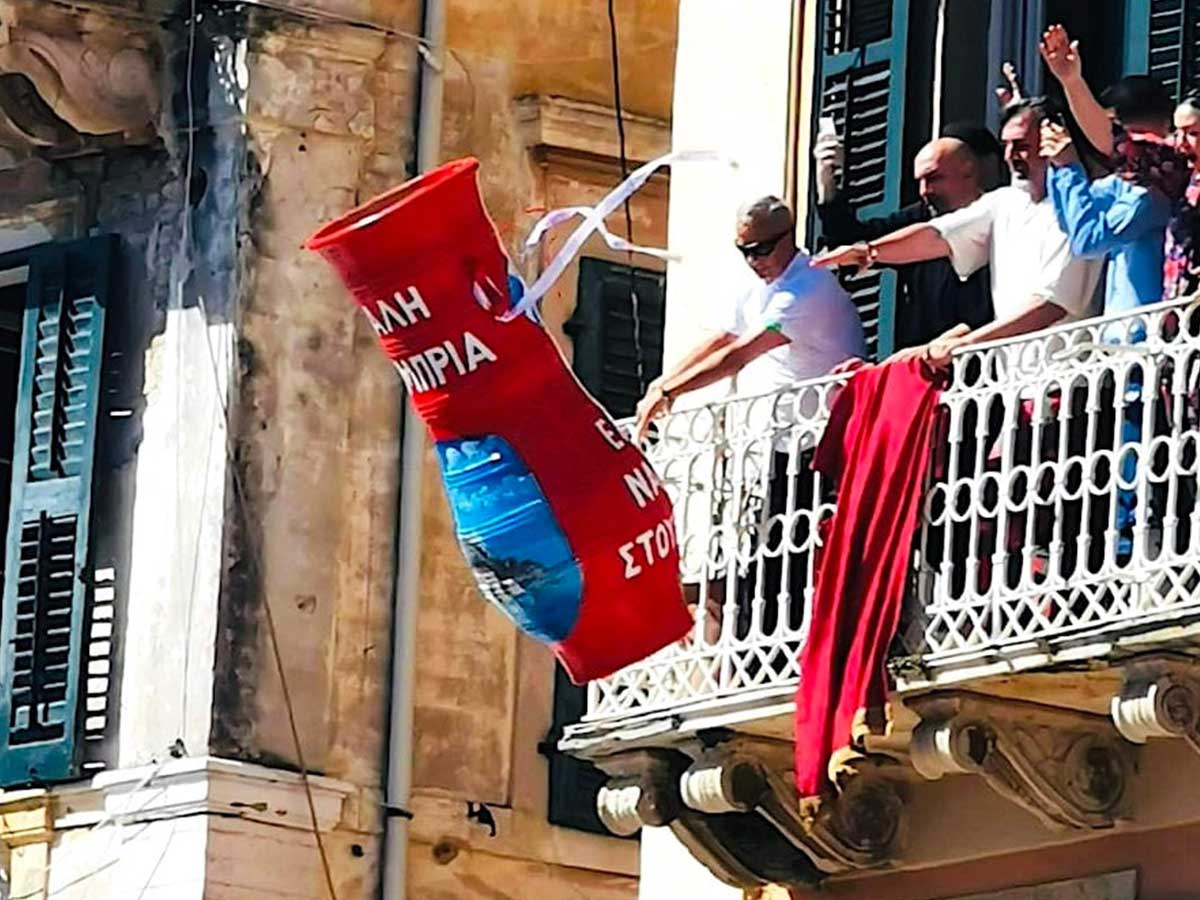
The pot-throwing tradition (botides), Renaissance-era musical compositions, and specific procession routes create an Easter experience distinct from Athens, Crete, or other Greek regions. Visitors witnessing Corfiot Easter often describe it as witnessing living history, where medieval pageantry meets vibrant contemporary celebration.
Architectural Details Worth Noticing
Walking beneath the Liston’s arches reveals careful attention to proportion and detail. Each arch follows identical dimensions, creating rhythmic repetition along the colonnade. The ground floor arcades feature Ionic columns with simple capitals, while upper floors display decorative balconies with wrought-iron railings.
The covered walkway provides shade during summer heat and shelter during winter rain, making it functional year-round. The vaulted ceilings, painted white, reflect natural light beautifully, creating luminous spaces even on overcast days.
Upper floors originally housed aristocratic residences and administrative offices. Today, they contain apartments, offices, and the exclusive Corfu Reading Society, one of Greece’s oldest cultural institutions founded in 1836. The society’s library preserves rare books, manuscripts, and archives documenting Corfu’s complex history.
Holy Week Leading to Easter
Palm Sunday: The week begins with church services where worshippers receive bay laurel branches (substituting for palms in Greek tradition). Families take these blessed branches home to place behind icons, believing they protect households throughout the year.
Holy Monday through Wednesday: Churches hold evening services featuring the Nymphios (Bridegroom) hymns. These hauntingly beautiful Byzantine chants prepare believers spiritually for the crucifixion commemoration. Corfu’s philharmonic bands perform accompanying music, adding orchestral depth to traditional Orthodox liturgy.
Holy Thursday: The dramatic Twelve Gospels service recreates Christ’s final hours. Priests read twelve gospel passages while worshippers hold lit candles, creating flickering light throughout darkened churches. The emotional intensity builds as the congregation processes around the church carrying the Epitaphios (Christ’s funeral bier) adorned with flowers.
Good Friday Morning: Churches display the Epitaphios elaborately decorated with thousands of fresh flowers. Women spend hours arranging roses, lilies, and carnations into intricate patterns, creating stunning floral artworks. Visiting the Epitaphios in multiple churches becomes a solemn pilgrimage for devout Corfiots.
Good Friday: The First Resurrection and Litanies
Corfu divides Good Friday into two distinct ceremonies foreign to mainland Greek tradition.
First Resurrection (11 AM): At exactly 11:00 AM on Holy Saturday morning, bells ring out announcing the “First Resurrection” commemorating Christ raising Lazarus. This moment triggers the famous pot-throwing.
Residents lean from balconies throughout the Old Town, particularly around the Liston and Spianada, holding large ceramic pots (botides) filled with water. At the first bell toll, they hurl pots earthward where they explode spectacularly on the pavement below, creating deafening crashes and scattering clay shards everywhere.
The symbolism: Multiple interpretations exist. Some claim it represents throwing out the old to welcome the new (spring renewal). Others connect it to Venetian New Year customs of discarding old possessions. The most popular explanation relates to biblical passages about new wine requiring new vessels.
Safety measures: Authorities cordon off streets, though enthusiastic locals sometimes venture into impact zones moments after the crashes to collect pottery shards considered lucky charms. The thunderous simultaneous crashes from hundreds of balconies create an unforgettable auditory experience.
Practical tips for visitors: Arrive early (by 10 AM) to secure viewing positions. Stand well back from building facades. Protect cameras and phones from pottery shrapnel. The Liston arcade provides excellent sheltered viewing.
The Philharmonic Processions
Good Friday evening showcases Corfu’s extraordinary musical heritage.
Four philharmonic orchestras (Philharmonikes) process through Old Town streets playing funeral marches composed specifically for this occasion.
The Four Bands:
Philharmoniki Mantzarou (Old Philharmonic): Founded 1840, the oldest and most prestigious
Philharmoniki Kapodistrias (New Philharmonic): Established 1890, known for strict musical standards
Philharmoniki Paleon Polemon (War Veterans): Founded 1980 by former Mantzarou members
Philharmoniki Anagennisis (Rebirth): The youngest band, established 2010
Each band follows different routes through the Old Town, their paths intersecting at the Spianada where all four perform simultaneously. The cacophony of competing funeral marches creates surreal, emotionally overwhelming atmosphere.
Musical repertoire: Unlike typical Greek chanting, Corfiot Easter music draws from Italian opera and Venetian sacred compositions. Verdi’s influence is unmistakable. The bands play Marcia Funebre arrangements with full orchestration including brass, woodwinds, and percussion.
What to expect: Bands march in formal uniforms with precise military precision. Thousands of people carry lit candles, creating rivers of flame flowing through narrow streets. Incense smoke, flickering candlelight, and mournful music combine into profoundly moving spectacle.
Holy Saturday: Resurrection and Fireworks
The Holy Saturday midnight service represents Orthodox Easter’s climactic moment. All electric lights extinguish at 11:45 PM as churches fill beyond capacity.
Midnight Announcement: At exactly midnight, priests proclaim “Christos Anesti” (Christ is Risen). Church bells ring jubilantly, fireworks explode across the sky, and worshippers light candles from the Holy Flame, passing fire person-to-person until entire congregations glow.
Corfu’s special traditions: The Spianada transforms into massive outdoor church as thousands gather around the Liston. When midnight strikes, the sky erupts with spectacular firework displays funded by municipality and private donors. The Old and New Fortresses become illuminated backdrops for pyrotechnic artistry.
First Eggs: Immediately after the Resurrection announcement, people crack red-dyed eggs together, saying “Christos Anesti” and “Alithos Anesti” (Truly He is Risen). The person whose egg doesn’t crack supposedly enjoys good luck all year.
Mayiritsa Soup: Families return home at 1-2 AM to break the Lenten fast with mayiritsa, a rich soup made from lamb offal, eggs, and lemon. This traditional dish restores strength after 40 days of fasting.
Easter Sunday: The Feast
Easter Sunday revolves around the grand feast, typically featuring whole lamb or kid roasted on outdoor spits.
Morning Church Service: A joyful liturgy contrasting sharply with Good Friday’s somber mood. Priests wear brilliant white and gold vestments, churches overflow with lilies, and hymns celebrate resurrection triumph.
The Feast Preparation: By mid-morning, parks, beaches, gardens, and yards throughout Corfu feature makeshift rotisseries slowly turning whole lambs. Men tend fires while women prepare side dishes: roasted potatoes with lemon and oregano, Greek salad, tzatziki, dolmades, and endless plates of mezze.
Communal Celebration: Extended families gather, often including 20-30 people. Tables groan under food quantities. Wine flows freely. Music, dancing, and celebration continue until evening.
Dessert traditions: Tsoureki (sweet braided bread), kourabiedes (almond cookies), and flaounes (cheese-filled pastries) appear on every table. The red eggs become centerpieces and snack items throughout the day.
The Liston in Literature and Film
Numerous writers have immortalized the Liston’s charms. Lawrence Durrell references it in “Prospero’s Cell,” his lyrical memoir of pre-war Corfu. Gerald Durrell’s “My Family and Other Animals” includes childhood memories of ice cream at Liston cafés. Modern travel writers inevitably dedicate paragraphs to its timeless appeal.
Films showcasing Corfu frequently feature Liston scenes. The arcade’s photogenic qualities and European elegance provide instantly recognizable backdrops.
Easter Monday: Continuation and Countryside Picnics
Unlike many countries where Easter Monday feels anticlimactic, Corfiots maintain the festive spirit. Families often organize countryside picnics, heading to beaches or mountain villages for more lamb, more feasting, and outdoor games.
Traditional villages host local festivals (panigyria) with live music, dancing, and communal meals. These events welcome visitors warmly, offering authentic glimpses into rural Corfiot culture.
Experiencing Easter as a Visitor
Accommodation: Book months in advance. Hotels fill completely during Holy Week. Prices peak but the experience justifies premium rates.
Respectful participation: Dress modestly for church services (covered shoulders and knees). Stand quietly during liturgies. Photography inside churches requires discretion and permission.
Best viewing spots for pot-throwing: Liston arcade, Spianada perimeter, side streets off Vouliagmenis and Nikiforou Theotoki.
Restaurant reservations: Most restaurants close Good Friday and operate limited hours Holy Saturday. Book Easter Sunday lunch well ahead or arrange home-cooked meal through accommodation hosts.
What to pack: Comfortable walking shoes for procession-following, warm layers for late-night services, formal-casual attire for Easter Sunday.
The Spiritual Dimension
Beyond spectacular traditions, Corfiot Easter maintains profound spiritual significance. The island’s deep Orthodox faith, tested through centuries of foreign occupation, expresses itself through these elaborate ceremonies.
The contrast between Good Friday’s mourning and Easter Sunday’s joy mirrors the resurrection narrative powerfully. Participating in candlelit processions, witnessing pot-throwing symbolism, and sharing post-Resurrection meals with Corfiots reveals Greek spirituality’s communal, celebratory nature.
Planning Your Easter Visit
VforVIP’s electric van service facilitates Easter week exploration throughout Corfu. We can arrange:
– Airport transfers during the busiest travel period of the year
– Transportation to village Easter celebrations outside Corfu Town
– Customized itineraries visiting multiple churches and ceremonies
– Early morning transport for First Resurrection pot-throwing
– Late-night pick-ups after midnight Resurrection services
Our drivers understand Easter traditions intimately and can guide you to lesser-known ceremonies, authentic village celebrations, and optimal viewing positions for major events. Our zero-emission vehicles respect the sacred nature of Holy Week while providing comfortable, reliable transport throughout your spiritual and cultural journey.