
The Venetian Influence: Corfu's Culinary Foundation
Pastitsada: Corfu’s Signature Dish
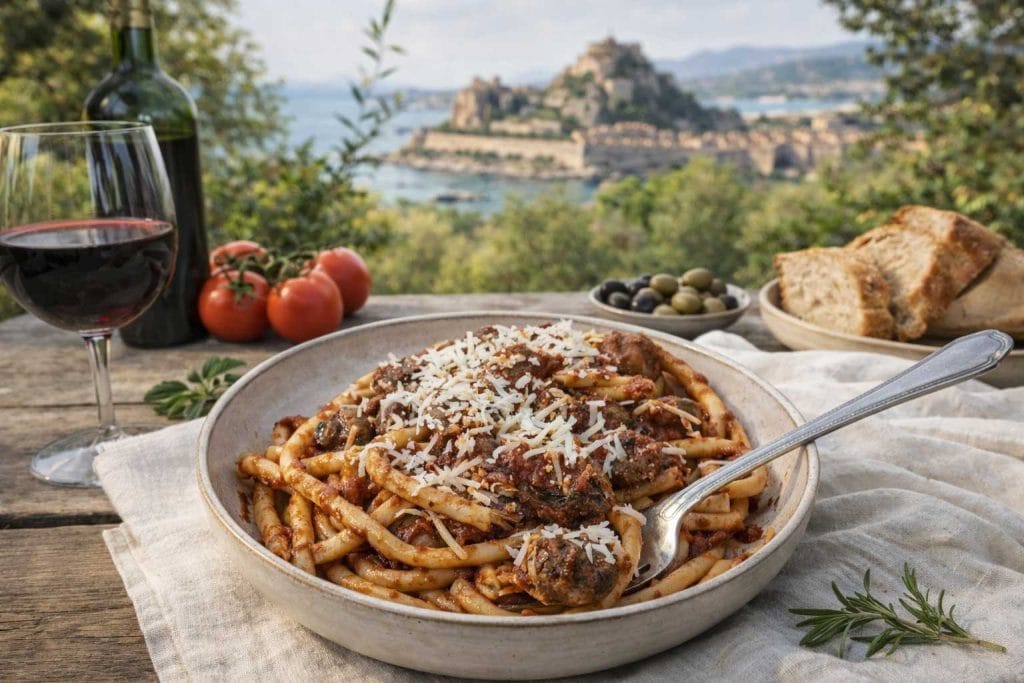
Pastitsada represents Corfiot cuisine’s apex a Sunday lunch tradition combining rooster (or veal) with thick tomato sauce flavored with cinnamon, cloves, and local wine, served over thick pasta.
The authentic recipe requires:
– Free-range rooster (traditionally), or veal in modern versions
– Fresh tomatoes or rich tomato paste
– Red wine (local Kakotrygis variety preferred)
– Whole spices: cinnamon sticks, cloves, bay leaves
– Thick pasta (makarounes) similar to bucatini
– Kefalotiri or mizithra cheese for serving
The magic happens during slow cooking minimum three hours allowing spices to infuse the meat while the sauce thickens to velvety consistency. Each family guards their grandmother’s recipe variations: some add vinegar for tang, others include orange zest, and debates rage over spice proportions.
Sofrito: The Venetian Comfort Food
Sofrito demonstrates pure Venetian technique adapted to Greek ingredients. Thinly sliced veal is pan-fried then simmered in white wine, garlic, parsley, and white vinegar sauce until fork-tender.
The dish’s name derives from Italian soffrito, though the Corfiot version evolved distinctively. The key is achieving the perfect sauce consistency creamy but not heavy and balancing garlic’s pungency with vinegar’s acidity and wine’s sweetness.
Traditional serving: Always with white rice or fried potatoes, never with pasta. The sauce must be abundant enough to soak into the rice.
Secret technique: Some cooks dust meat with flour before frying, creating a light coating that thickens the sauce naturally. Others insist flour ruins authenticity, preferring reduction alone.
Bourdeto: The Fisherman’s Spicy Creation
Bourdeto (from Italian brodetto) represents Corfu’s fishing heritage scorpionfish or other firm white fish simmered in fiery red pepper sauce with onions and lemon juice.
Unlike most Greek fish preparations, bourdeto embraces heat. The red pepper (boukovo) combined with paprika creates distinctive color and kick. The sauce’s intensity complements the sweet, delicate fish flesh perfectly.
Best fish for bourdeto: Scorpionfish (skorpina), monkfish, grouper, sea bass
Serving tradition: Family-style in the cooking pot, with crusty bread for sauce-sopping
Wine pairing: Chilled Robola or Assyrtiko cuts through the richness
Where it’s best: Coastal villages like Benitses, Kassiopi, and Boukari, where fishermen’s wives maintain generations-old recipes.
Savoro: Sweet and Sour Fish Perfection
Savoro showcases Venetian saor technique fried fish preserved in vinegar-wine marinade with garlic, rosemary, and raisins. Originally a preservation method for fishermen’s catches, it evolved into a beloved appetizer served cold or room temperature.
The sweet-sour balance defines savoro’s character. Raisins and optional currants add sweetness countering sharp vinegar, while rosemary and garlic provide aromatic depth. Small fish like sardines, anchovies, or gavros work best, fried until crispy then submerged in marinade for at least 24 hours.
Modern twist: Some tavernas add saffron or orange zest, creating golden-hued variations
Bianco: The Delicate Fish Stew
Bianco (Italian for “white”) contains white fish, potatoes, lemon, olive oil, and black pepperno tomatoes, creating a light, elegant dish highlighting fish quality over heavy sauces.
This preparation suits expensive fish like sea bream, grouper, or dentex. The potatoes cook in fish-infused broth, absorbing flavors while releasing starch that naturally thickens the sauce. Generous lemon juice and quality olive oil finish the dish, which should taste simultaneously rich and refreshing.
Serving style: Traditionally in shallow bowls with plenty of broth, accompanied by toasted bread rubbed with garlic
Tsigareli: The Healthy Green Side
Tsigareli represents Corfu’s vegetable-focused side wild or cultivated greens (mustard greens, chicory, Swiss chard) sautéed with plenty of garlic, hot peppers, and olive oil.
This dish connects to Corfu’s foraging traditions. In spring, locals gather wild greens (horta) from fields and olive groves, identifying dozens of edible species. The slight bitterness of greens balances garlic’s pungency and olive oil’s richness.
Health benefits: Packed with vitamins, minerals, and antioxidants a Mediterranean diet cornerstone
Perfect pairing: Serves alongside any meat or fish dish, cutting through richness
Sfoungato: The Venetian-Style Omelette
Sfoungato (from Italian spongato, meaning spongy) is a thick, fluffy omelette-pie hybrid made with zucchini, herbs, and cheese, baked until golden.
Unlike Greek frittatas, sfoungato achieves remarkable height and airy texture through specific beating techniques and baking rather than stovetop cooking. Grated zucchini releases moisture during cooking, creating steam that puffs the egg mixture.
Variations: Some versions include potatoes, others add mint or dill, and cheese choices range from feta to local graviera
When to eat it: Traditionally served during Lent (cheese-free versions) or as Easter appetizer
Koum Kouat: Corfu's Sweet Citrus Treasure
The kumquat (Chinese citrus fruit) arrived in Corfu during British rule and thrived in the island’s microclimate. Today, kumquat products define Corfiot sweets: liqueur, preserves, spoon sweets, candied fruits, and chocolates.
Kumquat liqueur (likero koum kouat) is sipped as digestif or mixed in cocktails. The sweet-tart flavor profile is uniquely Corfiotvisitors seeking authentic souvenirs invariably choose kumquat products.
How to enjoy: Chilled after dinner, or drizzled over vanilla ice cream
Mandolato and Pasteli: Ancient Sweet Traditions
Mandolato, a nougat-like confection with almonds and honey, dates to Venetian times. The chewy-crunchy texture and honey sweetness create addictive bites. Artisan producers in Corfu Town still make it by hand, stirring copper pots over open flames.
Pasteli, honey-sesame bars, trace back to ancient Greece. These nutritious sweets provided energy for athletes and travelers. Modern Corfiot versions sometimes incorporate local honey varieties or almonds.
Tsitsimpira: The British Legacy
Tsitsimpira (ginger beer) arrived with British colonials in the 19th century. Unlike commercial ginger ale, Corfiot tsitsimpira is non-alcoholic, cloudy, spicy-sweet, and deeply refreshing perfect for hot summer days.
Street vendors in Corfu Town still sell it from traditional carts, dispensed from large glass containers into paper cups. The recipe remains family secrets, passed through generations.
Best enjoyed: Ice-cold at Liston cafés while people-watching
Local Ingredients that Make the Difference
Olive Oil: Corfu’s 4+ million olive trees produce distinctive oil ruity, peppery, golden-green. Local varieties like Lianolia yield superior quality.
Wine: Indigenous varieties like Kakotrygis (red) and Petrokoritho (white) are experiencing renaissance among young winemakers.
Honey: Thyme, heather, and wildflower honeys from Corfu’s mountains possess intense aromatics.
Herbs: Wild oregano, mountain tea (tsai tou vounou), and wild fennel grow abundantly.
Cheese: Local graviera, mizithra, and feta from mountain dairies taste distinctly different from mainland versions.
Where to Experience Authentic Corfiot Cuisine
Mountain Villages: Doukades, Agros, Chlomos, Sinarades maintain traditional tavernas where grandmothers cook ancestral recipes.
Fishing Villages: Benitses, Agni, Boukari, Kassiopi serve fresh fish prepared according to centuries-old methods.
Corfu Town: Hidden spots in Campiello district offer authentic dishes away from tourist traps.
Home Cooking Classes: Several local families offer hands-on pastitsada or sofrito cooking experiences.
Planning Your Culinary Journey
VforVIP’s electric van service can create customized food tours connecting mountain tavernas, coastal fish restaurants, olive mills, and kumquat distilleries. Our drivers know which establishments serve authentic cuisine versus tourist versions, and can arrange:
– Multi-stop gastronomic itineraries
– Visits to family-run producers
– Reservations at traditional tavernas requiring advance notice
– Comfortable transport between villages on winding mountain roads
– Sustainable travel supporting local food culture
Our zero-emission vehicles ensure your culinary exploration respects the environment producing these incredible ingredients.